
For some people the word “leftist” has become a curse. There is no longer any need for substantive arguments — it is enough to tag someone a “leftist” and hope that will do the job. Many also carry a hidden assumption that the left is the opposite of Judaism; that what we really have here is a struggle between Hellenizers who “forgot what it means to be Jewish” and right-wing Maccabees, guardians of identity and keepers of the flame.
So to understand why this is a grave mistake, here are a few brief tastes of the centrality of the “leftist” outlook within the tradition of Israel throughout the generations. Because the argument between right and left is not a struggle between Hellenizers and Jews, but a necessary struggle between the two most central outlooks within Judaism itself.
***
Moments before the Declaration of Independence, hardly anyone thought “the State of Israel” would be the state’s name. Fifty years before its founding, Herzl, the visionary of the state, actually called it “the State of the Jews.” Five months before its founding, on the 29th of November, when the United Nations voted to allow the establishment of a state for the Jews, the newspaper Davar excitedly proclaimed: The State of the Jews has arisen! And the newspaper Yedioth Ahronoth announced the founding of a “Hebrew State” — but in no newspaper is there any trace of the name “State of Israel.”
Five days before the state’s founding, in the version of the Declaration of Independence proposed by the People’s Administration, where the name of the state should have appeared there is a blank line, while the early drafts of the declaration carry the name “the Jewish State.” Only 48 hours before the declaration did Moshe Sharett and Ben-Gurion, on their own, settle the name: “the State of Israel.”[1]
The question of whether the state’s name is “the State of the Jews” or “the State of Israel” echoes one of the most important identity questions of our own day as well: Jewish or Israeli?
Remarkably, a careful study of the biblical literature and the literature that followed it reveals that the tension between Israeliness and Jewishness has accompanied this people from the moment it was born. Its most famous expression is the existence of the two kingdoms that stood side by side for centuries — the Kingdom of Judah and the Kingdom of Israel. But the tension between them is older still, found already in the dispute over which tribes would lead the people: would it be the tribe of Judah, later the core of the Kingdom of Judah, or the tribes of Joseph, later the core of the Kingdom of Israel?
In the biblical story the dispute over leadership began among the sons of Jacob and was present at the entry into the Land as well, long before the division of the monarchy.[2] In fact, the roots of the dispute reach all the way back to the split between the two names of the nation’s father — Jacob and Israel — and the Sages tell us (Babylonian Talmud, Sukkah 52a) that it stretches forward to the End of Days, in their ruling that there will be two messiahs: an Israeli messiah (Messiah son of Joseph) and a Jewish messiah (Messiah son of David).
It is interesting to note that already in the Bible and in rabbinic literature the tribes of Israel are identified with the “left” and the tribes of Judah with the “right.” This identification begins with the geographical position of the kingdoms. The Kingdom of Judah sat in the south of the land (the right hand — “teimanah”), while the Kingdom of Israel sat in the north (“left” in the Bible, as in today’s Arabic, means north). The identification appears several times in the Bible, for example in Ezekiel (4:4): “Lie on your left side, and place the iniquity of the house of Israel upon it […] and lie on your right side, and bear the iniquity of the house of Judah.” And so the future resolution of the dispute between the Israelis and the Jews is also envisioned as the joining of the right hand and the left: “And join them one to another […] and they shall become one in your hand” (Ezekiel 37:17).
But does this very ancient semantic link — Israeliness with the left and Jewishness with the right — extend to essence and content as well? A look at many sources reveals a striking correspondence between the ancient dispute between Judah and Israel and the differences of outlook in our own day between left and right. Here are three brief examples:
The attitude toward the gentiles and the nations of the world:
The Jewish position championed the outlook expressed in the verse “Behold, a people dwelling alone, not reckoning itself among the nations” (Numbers 23:9), while the outlook of the Israelite tribes of Joseph expresses an open attitude toward the world. This connects to the geographical differences between their territories as well: Judah’s territory is high and closed off, while Joseph’s is open to the sea and to the main trade routes, which served as a bridge to the culture of the nations.[3] The Kingdom of Judah was closed to outside innovations, while the Kingdom of Israel was open to the world, very wealthy, and forged many alliances throughout all its years — with Sidon, Aram and others. This was part of an outlook of equal regard for every human being as a human being, as Rav Kook writes of the Israeli side: “which points to the aspects in which there is a relation of equality between Israel and all the nations” (Rav Kook, The Eulogy in Jerusalem). So it is in our day too — the right tends toward separatism, nationalism and the emphasis of unique identity, while the left is more open to the culture of the nations, to receiving from them and to forging alliances.
The form of government:
In the Kingdom of Judah there was continuous central rule by a single dynasty, while in the Kingdom of Israel there were seven different dynasties that changed hands frequently. The ancient “Israeli” outlook saw no need for central dynastic rule. So it was with Joshua of the house of Joseph, who quite deliberately appointed no leader after him, so that local leaderships could arise from every tribe (the period of the Judges). This difference is evident in the sacred centers of each kingdom as well. The Temple in Judah was central, with “the light” radiating outward from it, whereas Israel’s sanctuaries were at Bethel and Dan — at the edges, as “embracing” sanctuaries.
In our day too, the left’s fundamental outlook sees the monarchy, or the state, as a tool — sometimes a necessary tool, sometimes a corrupting one — but in any case not a value in itself. Yitzhak Tabenkin, one of the fathers of the Zionist left, put it well:
The Revisionist sees himself as Herzl’s heir: his notion is that everything will be realized only through the state […] He believed that it is not man who is the crown of creation, but the state that is the highest form, the sovereign power exalted above man […] But for us the state is not the ideal — what matters is the people, not the state. We look to mastery over nature, not mastery over man.[4]
After the founding of the state he added: “The same calamity that befell others has befallen us. The lust for power has overcome us.”[5] One can see this clearly today as well, when the right’s conception of its leaders is monarchic, almost dynastic; the Likud party has had only four leaders since the founding of the state, each of them chosen leader only after the previous one retired, whereas the Labor party has had fifteen leaders replacing one another through “beheadings,” much like the ancient toppling of dynasties in the Kingdom of Israel. For all the instability this brings, it expresses the left’s basic outlook, which is more democratic and less monarchic.[6]
The attitude toward God and man:
The left’s position rests on a great faith in man: “For I still believe in man, and in his spirit, a spirit of might” (Tchernichovsky, “I Believe”). The right’s position, by contrast, rests on a suspicious view of human nature. That is why the right fundamentally emphasizes the need for the political institution and its power. Great faith in man’s good nature makes supreme laws unnecessary, whereas suspicion, and the view that “were it not for the fear of the government, men would swallow each other alive” (Avot 3:2), leads to a stronger legal-halakhic faith.
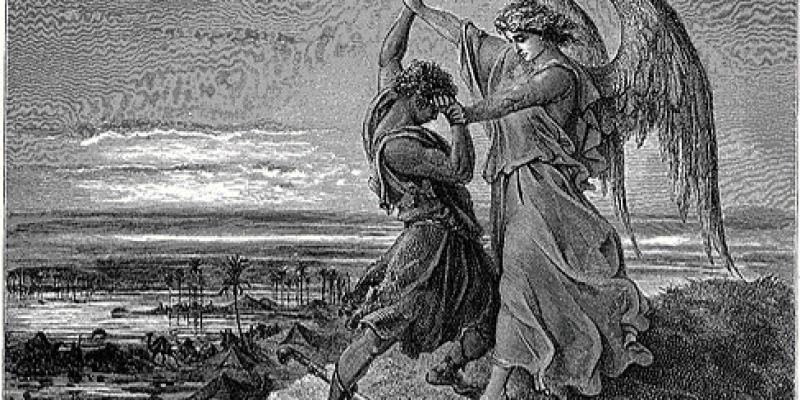
That is why, all over the world, the left is more “secular” and the right more “religious.” The left believes that without laws and restrictions man’s good inclination will lead to wealth and prosperity, while the right believes such a state of affairs will lead to a “war of all against all” in which everyone tramples his fellow. Thus, just as the right clearly prefers the laws of the political establishment, it will also prefer to accept the laws of the religious establishment, without which, in its view, “man is wolf to man.” The tribes of Israel in the past were likewise seen as “more secular” and more rebellious than the tribes of Judah, who remained more faithful to the laws. The Judahite outlook is rooted in the inner act of accepting the supreme law — the “acknowledgment” (hoda’ah) of the limits of human power. Against it stands the name “Israel,” whose meaning was explained the moment it was given to Jacob — “for you have striven with God and with men, and have prevailed” (Genesis 32:29) — embodying all the foundations of the Israeli outlook, which is not afraid to struggle and to innovate, even against men, and if need be against God as well.
What emerges from all this is that although to many it sometimes seems as if “leftist” outlooks are external to the tradition of Israel and are nothing but a recent acquisition brought in by modernity and the Haskalah, the left’s outlook is a foundational one, part of this people’s DNA from the day it was born, and the struggle between left and right is very ancient. The tradition of Israel did not try to decide who is right; it knew that it is precisely the existence of these two outlooks side by side that can bring balance and prosperity.
The dialogue between right and left, between the State of the Jews and the State of Israel, is the most important dialogue taking place in the people of Israel today. When this dialogue does not exist, each side’s tendencies sharpen toward the extreme: the right can deteriorate into fascism, separatism and fratricidal wars, while the left can deteriorate into loss of identity and self-hatred. The tension between them is what creates that wonderful thing called the people of Israel, which on the one hand preserves its uniqueness and distinctness, and on the other hand constantly receives from the whole world and constantly gives to the whole world. These are two critical voices, without which we have no ability to realize the vision of the model state.
******
[1] On the evolution of the text of the Declaration of Independence, see: Yoram Shachar, “The Early Drafts of the Declaration of Independence,” Iyunei Mishpat 26(2), 2002, pp. 523–600.
[2] See for example Joshua 11:21; 1 Samuel 11:8; 2 Samuel 11:11; 2 Samuel 19:42; Psalms 114:1.
[3] In every culture, coastal dwellers were more open to the world, and studies show it is no coincidence that the first democracies arose in lands by the sea, like ancient Greece.
[4] “The Difference Between Us and the Revisionists in Our Relation to the State,” Settlement — Essence and Way, Yalkutei Tabenkin series 1, Hakibbutz Hameuchad, 5743 (1983), p. 40.
[5] Yitzhak Tabenkin, Devarim 3, p. 299.
[6] For an interesting comparison between Ben-Gurion and Jabotinsky, see Zeev Tzahor in an interview with Kobi Meidan about Zeev Jabotinsky, the Broadcast University, Galei Tzahal — “On the Iron Wall” by Zeev Jabotinsky with Prof. Zeev Tzahor, 28.06.16.


