
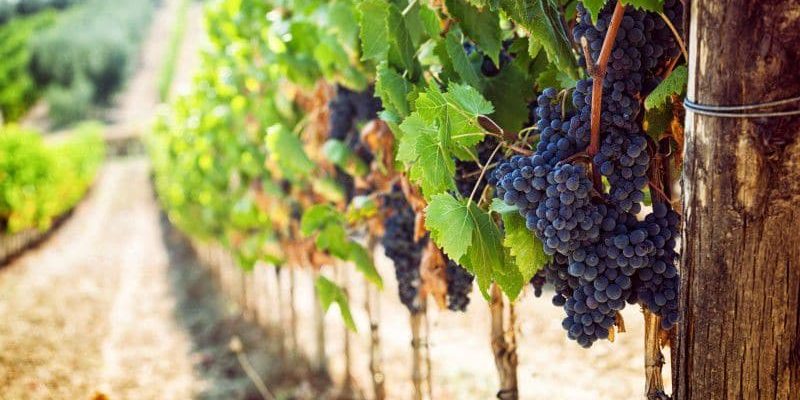
“There were no better days for Israel than the fifteenth of Av and Yom Kippur, on which the daughters of Jerusalem would go out in borrowed white garments, so as not to embarrass those who had none… and the daughters of Jerusalem would go out and dance in the vineyards. And what would they say? ‘Young man, lift up your eyes and see what you choose for yourself. Do not set your eyes on beauty; set your eyes on family.'” (Ta’anit chapter 4, Mishnah 8)
Tu B’Av is noted in the Mishnah as one of the finest and most important days that Israel had during the Second Temple period.
Already the Gemara wonders at the comparison of this obscure date to Yom Kippur, and it brings several traditions about events that occurred on Tu B’Av:
“But the fifteenth of Av — what is it? Rav Yehuda said in the name of Shmuel: the day on which the tribes were permitted to intermarry with one another… Rav Yosef said in the name of Rav Nachman: the day on which the tribe of Benjamin was permitted to re-enter the congregation… Rabbah bar bar Chana said in the name of Rabbi Yochanan: the day on which the dying of the generation of the wilderness ceased… Ulla said: the day on which Hoshea son of Elah removed the guards that Jeroboam son of Nevat had placed on the roads to keep Israel from making the pilgrimage, and declared: let them go up to whichever place they wish. Rav Matna said: the day on which the slain of Beitar were brought to burial” (Babylonian Talmud, Tractate Ta’anit 30b).
Without delving deeply into the events mentioned, the striking common denominator among them all is that these were not really “joyous” events. All of them are, at bottom, a repair of sins and disasters that befell the people of Israel: in the episode of the concubine at Gibeah the tribe of Benjamin was nearly wiped out — on Tu B’Av it was permitted to re-enter the congregation; on Tisha B’Av the spies sinned and it was decreed that their entire generation would die in the wilderness — on Tu B’Av the decree was annulled; Jeroboam son of Nevat forbade the pilgrimage to Jerusalem — on Tu B’Av the road was opened to the pilgrims; on Tisha B’Av Beitar fell and its inhabitants were massacred — on Tu B’Av, years later, its slain were brought to burial. From the events the Sages listed, it emerges that Tu B’Av does indeed recall Yom Kippur, in that it carries forgiveness and repair for sins that occurred, most of them, in the month of Av.
As the Gemara already noted, one of the prominent events of this holiday is the day on which the tribe of Benjamin was permitted to re-enter the congregation, after the tragic events of the concubine at Gibeah. This took place when the men of Benjamin went out to seize the daughters of Shiloh as they danced in the vineyards — “And they commanded the children of Benjamin, saying: Go and lie in wait in the vineyards; and see, and behold, if the daughters of Shiloh come out to dance in the dances, then come out of the vineyards, and catch you every man his wife of the daughters of Shiloh, and go to the land of Benjamin.” (Judges 21:20)
The elders of the assembly regret their oath not to give their daughters as wives to the tribe of Benjamin, and fear that a tribe will thus be erased from Israel. They find their creative solution in an ancient festival that had been held for many years among the vineyards of Shiloh —
“And they said: Behold, there is a feast of the LORD in Shiloh from year to year, which is on the north of Beth-el, on the east side of the highway that goes up from Beth-el to Shechem, and on the south of Levonah” (Judges 21:19).
Ancient Shiloh was the capital city of the people of Israel in their land throughout the entire period of the Judges, some 369 years. Like many other villages in the Ephraim hill country, Shiloh too was surrounded on all sides by fine vineyards. In these vineyards a unique festival arose and grew — Tu B’Av, a festival that does not appear in the Five Books of the Torah. In what follows we will try to understand how this festival grew, why it became established specifically as a women’s festival, what its special character was, and why, of all places, among the vineyards of Shiloh?
The Vineyards of Samaria
As a foundation for understanding the uniqueness of the festival, one must understand what the agricultural landscape around Shiloh looked like in antiquity. Today, the agricultural landscape in most parts of Samaria is one of olive groves. But in ancient times the land of Samaria, at whose heart Shiloh sits, was blessed with fertile, excellent vineyards, and grape growing was the most important branch of agriculture in the Samarian highlands. An abundance of verses and sources points to the ancient agricultural landscape that once dominated here: the vineyards of Shiloh (Judges 21), Abimelech’s vineyards in Shechem (Judges 9), the distinctive vine idioms of the sons of Joseph — “the gleanings of Ephraim and the vintage of Abiezer” (Judges 8–9) — and above all the prophecy of Jeremiah, who sees Samaria in its destruction and foretells that the agricultural landscape will grow green again as before: “You shall yet plant vineyards on the mountains of Samaria…”. Conversely, when the prophets wish to rebuke Ephraim, they draw on the vineyard landscape in their prophecies of wrath — “Woe to the crown of pride of the drunkards of Ephraim, whose glorious beauty is a fading flower” (Isaiah 28). Ephraim, as it were, is drunk and has strayed from the path because of the vineyards adorning its territory. Even Jacob’s blessing to Joseph, “ben porat Yosef” (“Joseph is a fruitful vine”), alludes to the blessing of the vineyards of his territory, for the “porah” is one of the finest grape varieties, and so indeed renders Targum Yonatan on the verse: “I liken you, Joseph, to a vine planted by springs of water…”. (On the difference between the vine of Samaria — the porah — and the “sorek,” the vine of Judah, we will dwell another time..)
In the Second Temple period as well, the finest wine brought to the Temple came from western Samaria, and this region is called in the Mishnah “alpha for wine” (Menachot 8:6). The archaeological record likewise corroborates the ancient vineyard landscape that dominated Samaria. Beyond the hundreds of winepresses found scattered throughout Samaria, unique finds were discovered pointing to intensive grape cultivation — in western Samaria some 960 agricultural towers were found, built of hewn stone, which served the wine industry in the Second Temple period. At several sites in Samaria Prof. Adam Zertal uncovered small pits hewn into long rock surfaces, and he argued that these are the remains of a rock-hewn vineyard. Once every last patch of soil in Samaria was taken, farmers were compelled to plant their vineyards straight into the rock. And indeed it is well known that the vine does very well even in hard limestone, penetrating deep into the rock — and the quality of the wine only improves as a result! (Today too, many vineyards in Samaria are planted straight into the hard rock and yield excellent fruit, as the author of Targum Yonatan on the Torah already knew when rendering the words of Jacob’s blessing “ben porat Yosef”: “I liken you to a vine… that sends forth its roots and breaks the teeth of the rocks,” Keter Yonatan, Genesis 49.)
According to the Samaria Ostraca — potsherds describing shipments of wine and oil sent to the city of Samaria from the villages of Samaria in the biblical period — the wine shipments were three times greater than the oil shipments supplied to the city.
From the Muslim conquest onward, with the Muslim prohibition on drinking wine, the olive replaced the vine as the principal crop of Samaria.
Thus, the region of Samaria in antiquity was “alpha for wine,” the land of vineyards. It is only natural that the agricultural vineyard festival would develop in the area of the Samarian capital of the period of the Judges — Shiloh, crowned with vineyards on every side.
Tu B’Av — A Forgotten Agricultural Festival
Scripture notes that when they sought wives for the men of Benjamin, they did not invent a special festival for the purpose, but made use of a festival observed “from year to year” — from time immemorial. Where did this festival spring from, and why is it not mentioned in the Torah? To answer that, we must return to the days when most of the Land’s inhabitants were farmers, and the agricultural year cycle was the beating heart of Israelite culture in the Land.
We know from Scripture the famous list of the Seven Species, but there is a more basic and more fundamental list of species — “and you shall gather in your grain, your wine, and your oil” (Deuteronomy 11:14).
The grain (dagan) — wheat and barley; tirosh — the produce of the grapes; and yitzhar, which is olive oil. This list of four species appears dozens of times in Scripture, separately from the full list of the Seven Species. These species are more important and more essential to human life than the fig, the pomegranate, and the date; in fact they were considered the most basic staples for a person in antiquity: grain for bread, oil for food and for light, and wine — an energy drink like no other (unlike today, when wine reaches our table only on special occasions, in the past wine was the only “juice” that could be kept for a long time, making it a source of readily available sugars and a disinfecting drink in an environment without clean water — see “they say to their mothers: Where is grain and wine?” (Lamentations 2:12) and “the wine, that such as are faint in the wilderness may drink” (2 Samuel 16:2).
These four species are represented at the offering of sacrifices in the Temple — alongside the sacrifice one brings “fine flour mingled with oil, and its libation”: fine flour — wheat; oil — olive; libation — wine of the vine. These four species are represented on our Shabbat table as well: challot — grain; wine for Kiddush — tirosh; oil lamps — yitzhar.
As is well known, every one of Israel’s festivals also has an agricultural side, tied to the season of the year in which it falls. If we look at the three pilgrimage festivals we see that each of them, alongside its religious-historical aspect, also has an agricultural aspect connected to one of the species we mentioned:
Passover — this is the time the barley ripens, and therefore on Passover the Omer offering is brought, and from then on one may eat barley grown that year.
Shavuot — this is the time the wheat ripens, and therefore on Shavuot the offering of the Two Loaves is brought, and from then on one may eat wheat grown that year.
Sukkot — on Sukkot the olives ripen, and from then on the olive-harvest season begins, ending at Hanukkah — the festival of oil.
And what is missing? The festival of tirosh, of course. The fruit of the vine was never granted a festival of Israel marking the start of the grape harvest. Yet it turns out that, naturally enough, the ancient farmer of the Land of Israel, going out to the vineyard in the harvest season, rejoiced in the new fruit and celebrated the opening of the vintage season with joy and dancing.
And when does the grape harvest season fall in the hill country? At the height of summer, more or less in the middle of the month of Av — Tu B’Av.
Tu B’Av, then, was the day on which the agricultural season of the grape harvest opened, thereby completing a festival for each of the four staple products. Setting this festival within the ancient calendar rounds out, in perfect harmony, the system of agricultural “pilgrimages,” with two months separating each festival from the next — two months from the barley-harvest festival of Passover to Shavuot, two months from the wheat-harvest festival of Shavuot to Tu B’Av, and two months from the vintage festival of Tu B’Av to the olive-harvest festival of Sukkot.
Tu B’Av — The Fourth Pilgrimage
Thus, in the biblical period there was an additional festival, one with no religious-historical character but only an agricultural side — rejoicing at the start of the vintage season, which begins at the height of the month of Av. This festival was observed mainly in Shiloh and in Jerusalem, for in these places, owing to the proximity to the Tabernacle and the Temple, people would surely bring the new fruit up to the priests of the Temple with joy and dancing, just as first fruits are brought. And grapes, after all, do not keep for long — whoever wishes to bring up first fruits of grapes must do so close to the time of the vintage — on Tu B’Av! This is most likely why Tu B’Av as a pilgrimage festival was a local festival, mentioned in the sources only near the site of the Tabernacle and the Temple: in the period of the Tabernacle at Shiloh — as a festival taking place among the vineyards of Shiloh, and in the Second Temple period — as a festival in which mainly the daughters of Jerusalem took part. Throughout the Land this festival was observed as the vintage festival, but only near the site of the Temple was it also a festival of pilgrimage!
An echo of the fact that Tu B’Av was indeed accepted as a date of pilgrimage is mentioned in the Gemara in Ta’anit, which describes the events that occurred on Tu B’Av:
“But the fifteenth of Av — what is it? …Ulla said — the day on which Hoshea son of Elah removed the guards that Jeroboam son of Nevat had placed on the roads, and said — let them go up to whichever place they wish.”
That is, from the days of Jeroboam son of Nevat the roads going up from the Kingdom of Israel to Jerusalem were guarded so that the ten tribes could not make the pilgrimage to Jerusalem, and on Tu B’Av Hoshea son of Elah removed the guards and permitted the pilgrimage. Here we must ask: why did he do so precisely on Tu B’Av and not on one of the pilgrimage festivals on which people went up to Jerusalem — Passover, Shavuot or Sukkot? From this it seems fair to conclude that in the biblical period there was indeed an additional, fourth date on which people made the pilgrimage to Jerusalem — Tu B’Av.
With the departure into exile, the agricultural meaning of Israel’s festivals was forgotten. The festivals that had a historical anchor and were mentioned in the Torah, the people of Israel preserved throughout the generations. But Tu B’Av, which was primarily an agricultural festival, was forgotten along with the abandonment of working the land.
The Joy of the Vintage
And how was the vineyard harvested in ancient times? It seems that of all the branches of agriculture, the grape harvest merited exceptional joy. A trace of this custom of joy and celebration at the vintage is preserved in Scripture in the story of Abimelech, where it is written: “And they went out into the field, and gathered their vineyards, and trod the grapes, and held festival [hillulim]” (Judges 9:27)
That is, after the treading in the winepress they held “hillulim” — a vintage celebration of feasting and rejoicing. And so says the Ramban: “For the custom in the vineyard, when its produce comes in, is to dance there and go through it with flutes” (Ramban on Deuteronomy 20:6)
The harvesting of the vineyard and the treading of the grapes were accompanied by distinctive cries of joy and gladness — “And gladness and joy are taken away out of the fruitful field; and in the vineyards there shall be no singing, neither shall there be shouting; no treader shall tread out wine in the presses; I have made the vintage shout to cease” (Isaiah 16). In the vineyards they sing and shout, and at the winepresses they cry “heidad, heidad” to the rhythm of the treading of the grapes. Indeed, even the term for the harvest work — zemirah — hints at the “zemer,” the song and melody, that accompanied the vintage (Yaakov Etzion has already shown in this forum that according to the Gezer Calendar “yarcho zemer” is the season of the vintage, not the season of winter pruning — that is, zemirah is the zemirah of the vintage!). Even the biblical phrase “nevel yayin” — a jar of wine (1 Samuel 10:3, likewise in the Samaria Ostraca and many more places in Scripture) — hints at a link between the well-known musical instrument, the nevel, and the wine industry.
Go, then, and consider how many expressions of joy Scripture devotes to the grape harvest — yerunan, yeroa, simchah, gil, hillulim, chillul, heidad, zemer, nevel — nine different expressions for the joy of the vintage.
Not for nothing did the vintage merit such exceptional joy, for its product, wine, is a source of joy and holiness — “and wine that makes glad the heart of man, making the face brighter than oil” (Psalms 104:15). So too Jotham, of the tribe of Manasseh, in his famous parable, recalls the joy of the vine — “And the trees said to the vine: Come and reign over us. And the vine said to them: Should I leave my wine, which cheers God and men, and go to hold sway over the trees?” (Judges 9:12).
And Rabbi Shmuel bar Nachmani already expounded on this verse: “From here we learn that song is recited only over wine” (Babylonian Talmud, Tractate Berachot 35a). Indeed, only the produce of the vine was granted a special blessing attesting to its importance and its distinction from the rest of the produce of the Seven Species — “borei pri hagafen,” Who creates the fruit of the vine.
Thus that festival observed at Shiloh from year to year was a festival of agricultural character, in which people naturally went out to the vineyards with joy and song and brought the grape harvest up to the Tabernacle at Shiloh. But how did this festival come to have such a strong bond with women? For that we must climb one level higher.
From Year to Year — In the Territory of Ephraim
“And they said: Behold, there is a feast of the LORD in Shiloh from year to year…” (Judges 21:19). The expression “miyamim yamimah” (“from year to year”) is an almost unique expression, appearing in only three stories in the Prophets and Writings. This special expression calls on us to seek the connection between these three occurrences. Examining them will lift some of the mystery cloaking this obscure festival. (In the Torah this expression means: at a fixed time, every single year — see Exodus 13:10)
The next story in Scripture in which the expression “from year to year” appears deals with the birth of the prophet Samuel, just one chapter after the story of the concubine at Gibeah.
” Now there was a certain man of Ramathaim-zophim, of the hill country of Ephraim, and his name was Elkanah…: and he had two wives: the name of the one was Hannah, and the name of the other Peninnah; and Peninnah had children, but Hannah had no children. And this man went up out of his city from year to year to worship and to sacrifice to the LORD of hosts in Shiloh. And the two sons of Eli, Hophni and Phinehas, priests to the LORD, were there.” (1 Samuel 1)
Elkanah goes up year after year to the Tabernacle of the LORD at Shiloh. And on one of those occasions, Hannah, his barren wife, prays and is granted a child — none other than Samuel: “And it came to pass, when the time was come about, that Hannah conceived, and bore a son; and she called his name Samuel: because I have asked him of the LORD” (ibid. 20). And at what time of year would Elkanah go up to the Tabernacle at Shiloh? The Midrash describes this:
“Elkanah would go up four times a year — three by the Torah, and one that he took upon himself. As it is said: And this man went up out of his city from year to year” (Eliyahu Rabbah, chapter 9).
That is, Elkanah made the pilgrimage on the three festivals — Passover, Shavuot and Sukkot — plus one special pilgrimage that he took upon himself. One may surmise that this fourth pilgrimage he took upon himself was Tu B’Av, the fourth pilgrimage observed in his day. (And perhaps this also explains Eli’s suspicion: “and Eli thought she was drunk” (ibid. 13). Eli fears that one of the women reveling in the vineyards of Shiloh on Tu B’Av became drunk on the joy of the wine and made her way inside, into the sanctuary!)
In the two stories we have seen so far, the expression “from year to year” appeared in the context of that “fourth pilgrimage” — the feast of the LORD at Shiloh, held on Tu B’Av. In both stories this is a women’s festival, and the heroines of the story, and of the festival, are women — the daughters of Shiloh going out to dance in the vineyards, and Hannah, who by the power of her prayer merits a prophet son who will deliver Israel. How did Tu B’Av come to be bound up specifically with women? Perhaps we will find the answer in the third story in which the expression “from year to year” appears — the story of Jephthah’s daughter[1]. In this story the expression appears for the first time in the Prophets and Writings.
Jephthah was of the sons of Manasseh, in Gilead. And before the victory over the children of Ammon, he vows a vow —
” And Jephthah vowed a vow to the LORD, and said: If You will indeed deliver the children of Ammon into my hand, then it shall be that whatever comes forth from the doors of my house to meet me, when I return in peace from the children of Ammon, shall be the LORD’s, and I will offer it up for a burnt-offering.” (Judges 11:30)
After Jephthah is victorious and returns in peace, the first to come out to meet him is his only daughter.
“And Jephthah came to Mizpah, to his house, and, behold, his daughter came out to meet him with timbrels and with dances; and she was his only child; beside her he had neither son nor daughter. And it came to pass, when he saw her, that he rent his clothes, and said: Alas, my daughter! You have brought me very low, and you are become my troubler; for I have opened my mouth to the LORD, and I cannot go back” (ibid. 34)
Jephthah sees that the one coming out of the door of his house is his only daughter, and understands that now he must fulfill his vow and offer her up as a burnt-offering. His righteous daughter agrees, and she has but one request:
” And she said to her father: Let this thing be done for me: let me alone two months, that I may depart and go down upon the mountains, and bewail my virginity, I and my companions “.
— Jephthah’s daughter asks to go with her companions to weep over the fact that she never married and never merited a child. After she returns, Jephthah does to her “his vow which he had vowed.” The biblical commentators dispute whether he actually killed her, or whether she merely dwelt in a secluded place until the end of her days and knew no man. Either way, the tragic story of Jephthah’s daughter was remembered by the generations that followed, and all the daughters of Israel knew the story of the unfortunate heroine who hurried out in dances, not knowing she was going out toward her end. Jephthah, with his own hands, cuts off his own seed — for this daughter is his only descendant, and as a result of his deed Jephthah has no continuation.
The story closes with two astonishing verses, which close the circle of “from year to year”:
” And it came to pass at the end of two months, that she returned to her father, who did with her according to his vow which he had vowed; and she had not known a man. And it was a custom in Israel, that the daughters of Israel went from year to year to lament the daughter of Jephthah the Gileadite four days in a year ” (ibid. 39).
In these verses lie hidden all the motifs hinting at the character of the “fourth pilgrimage”: the unique expression “from year to year” links us at once to the stories of “the feast of the LORD at Shiloh,” and indeed the verse goes on to mention that they would lament Jephthah’s daughter “four days in a year” — that is, the three pilgrimage festivals, plus a fourth. In this story lie the foundations of this festival’s transformation into a festival with a strong feminine bond — “and it was a custom in Israel — from year to year the daughters of Israel went.” This is a custom, a fixed practice, year after year, set apart for the daughters of Israel alone, and the context of the “custom” is mourning that a righteous woman, like Jephthah’s daughter, never merited fertility to her dying day. Would it be far-fetched to suppose that the date of this “fourth pilgrimage,” set apart for women alone, became over time a festival bound up with the fertility and continuity of the people of Israel? So it is in the story of Hannah, who chooses this very date to pray for a child and is answered; so with the daughters of Shiloh, who go out to dance and whirl in the vineyards so that a tribe not be erased from Israel and it continue to be fruitful and multiply. And might it even be that the custom of the daughters of Shiloh to go out in dances in the vineyards echoed “and, behold, his daughter came out to meet him with timbrels and with dances”..
The fourth pilgrimage, Tu B’Av, became fixed in the period of the Judges as a special pilgrimage, unique to women, and on this day, throughout the era, this festival was carried on, its theme being the continued fertility of the people of Israel — with each passing year, more faithful households were founded in Israel on this day. And fitting indeed that this festival grew precisely in the territory of Joseph — Ephraim, named for fruitfulness: “And the name of the second he called Ephraim: for God has made me fruitful in the land of my affliction” (Genesis 41:52) — fruitfulness and continuity even in hardship. Joseph’s zodiac sign, Pisces — the fish — likewise symbolizes fertility, as does Joseph’s inheritance, which divided in two — Ephraim and Manasseh.
In the winter months the bare vine looks dead and lifeless, and in the spring months it bursts forth with vigor, sending up green shoots that grow at great speed. This is why the vine in Israel’s tradition symbolizes continuity and fruitfulness: “Your wife shall be as a fruitful vine” (Psalms 128:3). How fitting, then, that the festival held in the vineyards of Shiloh symbolizes the continuity of the tribe that was not erased, and the fruitfulness and continuity of the people of Israel.
White in Levonah
The location of the vineyard festival celebrated at Shiloh is interesting in its own right, and lends further meaning to the character of the ancient festival. The verse describing the festival’s location does not state that it took place inside the city of Shiloh, but in one of the areas adjacent to it. Scripture gives this area a precise reference:
“on the east side of the highway that goes up from Beth-el to Shechem, and on the south of Levonah” (Judges 21:19).
The highway (mesilah) was the main road along the mountain ridge in the biblical period, running more or less along today’s Route 60 — crossing the ridge from the southern Hebron hills to northern Samaria. In the Shiloh area, the road ran along the modern road that descends from the community of Ma’ale Levona and continues past Khan Levona toward Shechem. Biblical “Levonah” is identified with the village of Lubban, which sits right on the main road, in the Levona Valley. According to the location given in the verse, the site of the ancient festival should be sought south of Lubban and east of the main road. This area is, in fact, the southeastern part of the Levona Valley, between the Eli junction and the Ma’ale Levona junction.
The Levona Valley is one of the southernmost valleys in the entire mountain ridge. In fact, for those walking the ancient hill road from Jerusalem to Shechem, it was the second valley they encountered, after the Shiloh Valley. The Levona Valley marks the transition from the rugged hills of Ephraim to the fertile agricultural landscapes and villages of Samaria. Yitzhak Ben-Zvi, who toured here in 1910, described it thus: “It would seem — the same mountains and the same nature; yet how great is the difference between the desolation of Judah’s bare rocks and the hills of Ephraim, wrapped in vineyards, vegetable gardens and fruit trees of every kind!” (The Travels of Yitzhak Ben-Zvi, Har HaBracha, p. 63).
The valley’s name, “Levonah,” can be expounded in many interesting ways. First, note the valley’s distinctive shape — an elongated, winding valley in the form of a half circle. Perhaps this is the source of its name, like a crescent — a levanah, a moon.
But the valley’s proximity to Shiloh, the city of the Tabernacle, suggests another line of thought — levonah, frankincense, was one of the most important ingredients of the incense, and it may be that here in Levonah they produced and ground the incense brought from afar along the hill road, and the place took its name from it. Especially interesting, though, is the conceptual link between the valley’s name and the events that took place in it. It turns out that the Levona Valley was the precise site of the festival of the women dancing in the vineyards. The dancing festival was woven through and through with white: the festival was held in the middle of the month, when the moon (levanah) is full, and on this festival the daughters of Shiloh went out dressed in white garments (Mishnah Ta’anit 4:8), dancing at the festival of the grape harvest. Tu B’Av is also the date on which the chatzav, the sea squill, begins to bloom — as its very name hints: chatzav, chatzi-Av, “half of Av” (Tu B’Av falls exactly in the middle of the Hebrew month). On Tu B’Av the Land of Israel dons a white mantle of tall sea-squill blossoms. Exactly six months earlier, on Tu B’Shvat, our land is crowned in the white of the almond blossom. To this day the many almond trees adorn the Levona Valley on every side, and a visit to the valley and its surroundings on Tu B’Shvat is a feast for the eyes. Thus the color white is woven deep into the story of the Levona Valley — in the month of Shvat it turns white with the blossom of the many almond trees planted in it, and six months later, on Tu B’Av, the white sea squill rises in its multitudes and the daughters of Shiloh go out dressed in white garments to dance in the Levona Valley.
White Days
“There were no better days for Israel than the fifteenth of Av and Yom Kippur” — two months lie between Tu B’Av and Yom Kippur. These days are days of exceptional joy in Israel’s tradition. In terms of the Land’s nature, these days are the last stretch of summer: the air grows cooler and autumn begins to be in the air. The Sages already noted: “From the fifteenth of Av onward the strength of the sun wanes…” (Ta’anit 31b). In these days the sea squill — herald of autumn — rises in its multitudes, the fruits ripen on the trees, and the night dews thicken in the air. After the days of judgment of the hot summer, which in Israel’s tradition symbolize the events of judgment that befell the people of Israel — the death of Rabbi Akiva’s students, the 17th of Tammuz and Tisha B’Av — come the pleasant days of grace of the month of Elul. These two months parallel the days of the “Sheva D’Nechemta” — the seven haftarot of consolation read on Shabbat. In the yeshiva world of the diaspora, it was customary already from Tu B’Av onward to strengthen oneself in Torah study and to begin repentance and good deeds.
In my humble opinion, those good days the Mishnah speaks of are the days between the fifteenth of Av and Yom Kippur. This period corresponds exactly to the vintage season, which lasts about two months (varying with the different grape varieties and regions), during which the daughters of Jerusalem would go out to harvest the vineyards and dance in them in white garments.
These are special days, days of grace, and they are bounded by the two festivals of pardon and atonement. Tu B’Av — the festival on which the sins of all Israel were atoned (the generation of the wilderness, Beitar, the concubine at Gibeah, the sins of Jeroboam…) and Yom Kippur — the personal festival of forgiveness of each and every member of Israel. Both of these days of atonement were painted in white — on Tu B’Av the daughters don white garments, and on Yom Kippur each and every member of Israel dons white garments. In both, the white symbolizes atonement and cleansing at the close of the days of judgment: “Though your sins be as scarlet, they shall be as white as snow” (Isaiah 1:18). It may be that these days are also those “two months” in which Jephthah’s daughter went to seclude herself in the mountains.
These are days of renewal, and of the last savoring of summer’s “fruits” before the long slumber of winter. Two months of grace, forgiveness and good days between the two white festivals. White days.
For further study:
Nogah Hareuveni — Nature and Landscape in the Heritage of Israel, “Tu B’Av: the festival of the Land forgotten in exile” (pp. 86-96)
Rabbi Yisrael Ariel — “Bikkurei HaAretz,” the Torah VeHaAretz Institute, “Tu B’Av, the festival of first fruits, the festival of the daughters of Israel” (pp. 353-383)
Rabbi Yisrael Rozen — Atarei Segulah at the Sages’ Eye Level, “Shiloh, base of the settlement” (pp. 87-88)
Yoel Elitzur — “Before Ephraim, Benjamin and Manasseh”: the territorial conception in the Arab village and in biblical geography
[1] This is the first occurrence of “from year to year” in the Prophets and Writings, but it is quite possible that chronologically the story of Jephthah’s daughter precedes the story of the concubine at Gibeah, which appears at the end of the book. According to the plain sense of the verses, the story of the concubine at Gibeah takes place at the beginning of the period of the book of Judges. Among the Sages there is one opinion placing the story at the end of the period, and another placing it at its beginning.


